
What is Digital Marketing? A Complete Guide from a Digital Marketer’s Perspective.
Introduction
If you search “What is digital marketing?” on Google, you’ll find hundreds of definitions. Most of them sound similar—technical, structured, and honestly, a bit disconnected from reality.
But as someone who works in this field every day, I can tell you this digital marketing is not just a definition, it’s an experience.
It’s the process of understanding how people behave online, what influences their decisions, and how you can connect with them at the right time using the right platform.
When I started my journey in digital marketing, I thought it was all about posting on social media or running ads. But once I got into it, I realized how deep it actually goes. It’s a mix of creativity, analytics, psychology, and constant experimentation.
In this blog, I’ll break down digital marketing in a practical, easy to understand way just like I would explain it to someone starting from scratch.
What is Digital Marketing in Simple Words?
Let’s keep it simple.
Digital marketing is the process of promoting products or services using the internet and digital platforms.
These platforms include:
- Search engines like Google
- Social media platforms like Instagram, Facebook, LinkedIn
- Websites and blogs
- Mobile apps
But here’s the key point digital marketing is not just about promotion, it’s about connection.
Every time you:
- Search something on Google
- Click on an ad
- Watch a reel
- Subscribe to a newsletter
You are part of a digital marketing funnel created by someone like me.
How Digital Marketing Actually Works (Real Perspective)
From the outside, it might look simple. But behind every campaign, there’s a structured process.
Here’s how digital marketing typically works in real life:
1. Understanding the Audience
Before doing anything, we ask:
- Who is the target audience?
- What are their problems?
- What are they searching for?
For example, if I’m marketing a digital marketing course, my audience could be:
- Students
- Job seekers
- Business owners
Each of them has different needs, so the strategy changes accordingly.
2. Choosing the Right Platform
Not every platform works for every business.
- Google is great for high-intent users (people searching actively)
- Instagram is great for engagement and brand building
- LinkedIn works well for B2B marketing
Choosing the right platform is half the game.
3. Creating Content or Ads
This is where creativity comes in.
We create:
- Blog posts
- Social media content
- Ad creatives
- Videos
But it’s not random—it’s based on strategy.
4. Running Campaigns
Once everything is ready, we launch campaigns:
- SEO campaigns
- Google Ads
- Social media ads
This is where traffic starts coming in.
5. Analyzing and Optimizing
This is the most important step.
We track:
- Clicks
- Conversions
- Cost per lead
- Engagement
Then we optimize.
Digital marketing is not “set and forget” it’s test, learn, improve, repeat.
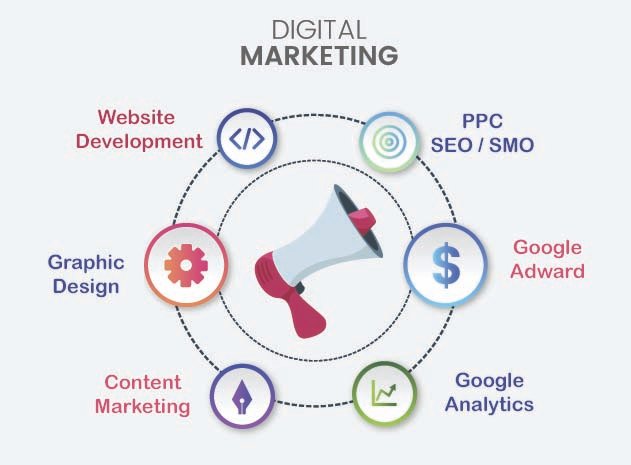
Core Components of Digital Marketing
Let’s break down the main pillars of digital marketing based on real-world experience.
1. Search Engine Optimization (SEO)
SEO is all about ranking your website on Google organically.
For example, when someone searches:
“Best digital marketing course in Mumbai”
The websites that appear on top didn’t get there by luck they used SEO strategies.
SEO includes:
- Keyword research
- On-page optimization
- Technical SEO
- Backlinks
From my experience, SEO takes time but once it works, it brings consistent traffic without paying for ads.
2. Pay-Per-Click Advertising (PPC)
This includes:
- Google Ads
- YouTube Ads
- Display Ads
Here, you pay to appear at the top.
The advantage?
Instant visibility.
The challenge?
If not done correctly, you can lose money quickly.
I’ve seen campaigns where businesses spent thousands without results just because they didn’t optimize properly.
3. Social Media Marketing
This is where brands build relationships.
Platforms include:
Social media is not just about posting it’s about:
- Consistency
- Engagement
- Storytelling
From my experience, brands that connect emotionally perform better than those that just sell.
4. Content Marketing
Content is the backbone of digital marketing.
This includes:
- Blogs
- Videos
- Reels
- Infographics
Good content:
- Educates
- Engages
- Builds trust
Bad content?
Gets ignored.
5. Email Marketing
Many people think email marketing is outdated but it’s still one of the highest ROI channels.
It helps in:
- Lead nurturing
- Customer retention
- Building long-term relationships
6. Affiliate and Influencer Marketing
This is about leveraging other people’s audience.
- Influencers promote products
- Affiliates earn commissions
This works really well for brand awareness.
Why Digital Marketing is Important Today
Let’s be practical if your business is not online, you’re already behind.
Here’s why digital marketing matters:
1. Everyone is Online
Your customers are already:
- Searching on Google
- Scrolling Instagram
- Watching YouTube
If you’re not there, your competitor is.
2. Cost-Effective Marketing
Compared to traditional marketing:
- Lower cost
- Better targeting
- Higher ROI
3. Measurable Results
This is my favorite part.
You can track everything:
- Impressions
- Clicks
- Conversions
No guessing only data.
4. Better Targeting
You can target people based on:
- Location
- Age
- Interests
- Behavior
This makes campaigns highly efficient.
Challenges in Digital Marketing (Real Talk)
Let me be honest his field is not as easy as Instagram makes it look.
Here are real challenges:
1. Constant Changes
Algorithms keep changing.
What worked last month might fail today.
2. High Competition
Everyone is doing digital marketing now.
Standing out is not easy.
3. Learning Never Stops
You have to keep updating yourself.
New tools, new trends, new strategies.
4. Patience is Required
SEO takes time.
Brand building takes time.
Results don’t come overnight.
Skills Required to Become a Digital Marketer
From my experience, you need a mix of:
- Creativity
- Analytical thinking
- Communication skills
- Adaptability
- Basic technical knowledge
You don’t need to be perfect—you just need to be consistent.
Career Opportunities in Digital Marketing
Digital marketing offers multiple career paths:
- SEO Specialist
- Social Media Manager
- PPC Expert
- Content Strategist
- Email Marketer
- Freelancer
- Agency Owner
You can even build your own personal brand.
My Personal Learning as a Digital Marketer
If there’s one thing I’ve learned, it’s this:
Digital marketing is not about tools it’s about understanding people.
Tools will change.
Platforms will evolve.
But human behavior remains the same.
If you understand what people want and how they think, you can succeed in this field.
Future of Digital Marketing
The future looks strong.
Trends to watch:
- AI in marketing
- Voice search
- Video content dominance
- Personalization
Digital marketing is only going to grow.
Final Conclusion
So, what is digital marketing?
From a real-world perspective:
Digital marketing is the process of attracting, engaging, and converting customers online using strategy, creativity, and data.
It’s not just a skill it’s a mindset.
Whether you are:
- A student
- A business owner
- A freelancer
Learning digital marketing can open new opportunities.
And the best way to learn?
Not just by reading—but by doing.
Bonus: SEO Keywords You Can Use
- What is digital marketing
- Digital marketing basics
- Learn digital marketing
- Digital marketing guide
- Importance of digital marketing
- Digital marketing for beginners